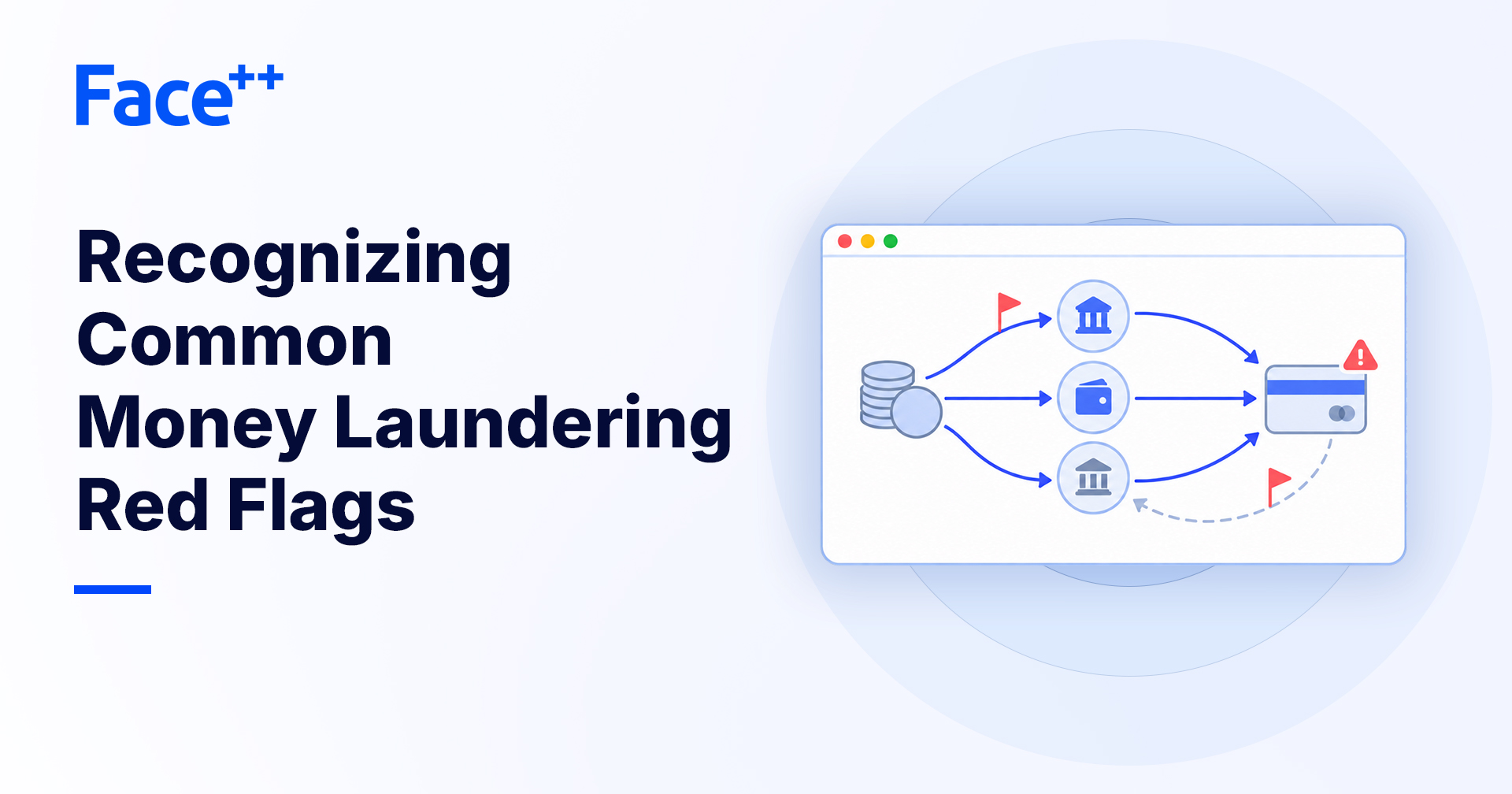
Money laundering red flags are behaviors, relationships, or transaction patterns that may indicate financial activity requires further investigation. They are not proof of criminal conduct, and many have legitimate explanations.
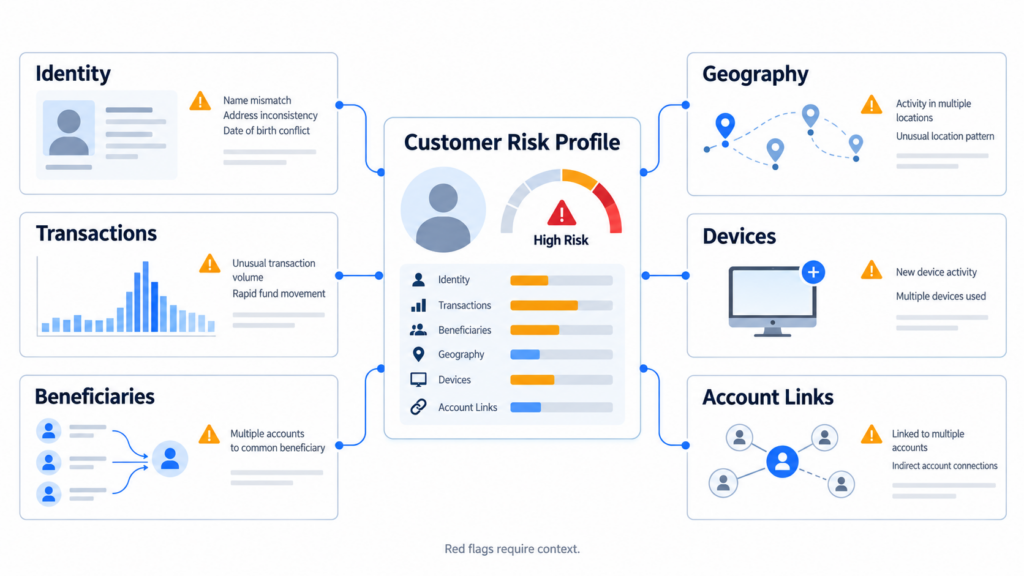
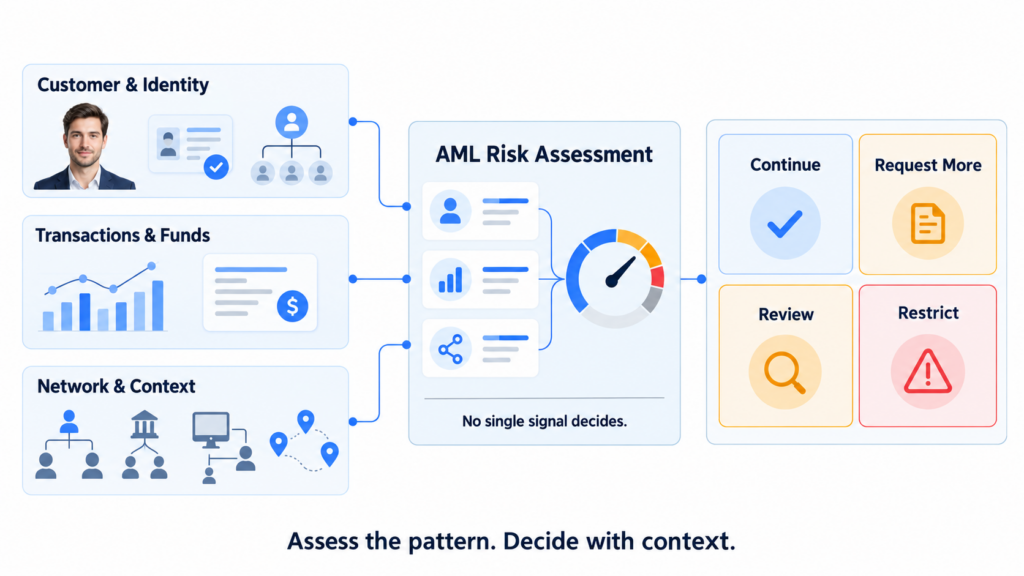
Digital financial platforms should therefore evaluate red flags in context. Effective monitoring combines customer identity, expected account activity, transaction behavior, beneficiaries, devices, geography, and account relationships instead of rejecting a customer because of one isolated anomaly.
The FATF describes the risk-based approach as identifying, assessing, and understanding money-laundering and terrorist-financing risks, then applying controls proportionate to those risks.
1. Customer Information That Does Not Fit the Account
Customer due diligence should help a platform understand who the customer is, what they do, and why they need the service.
Potential red flags include:
- Occupation or income inconsistent with transaction volume
- An unclear business purpose
- Frequent changes to identity or contact information
- Unexplained differences between submitted documents and account data
- Reluctance to provide beneficial-ownership information
- Multiple customers using the same address or contact details
- A newly created account immediately conducting complex transactions
These signals are more meaningful when compared with the customer’s stated purpose and expected activity.
Face++ OCR, face comparison, and liveness detection can strengthen identity assurance during onboarding. They help establish who is interacting with the platform, but they do not independently determine whether the customer’s financial activity is legitimate.
2. Unusual Transaction Size or Frequency
Transactions may require attention when their amount, frequency, or timing lacks a reasonable explanation.
Examples include:
- Activity far above the customer’s expected income or turnover
- Sudden transaction spikes after a period of inactivity
- Repeated transfers just below internal or regulatory thresholds
- Numerous small deposits followed by one large withdrawal
- Rapid movement of funds with little retained balance
- High transaction volume through a newly opened account
FATF guidance identifies unusual transaction patterns and amounts or frequencies without a logical business explanation as important risk indicators.
3. Rapid Movement and Pass-Through Activity
Money-laundering accounts may serve primarily as temporary channels rather than accounts used for ordinary financial activity.
Warning signs can include:
- Incoming funds transferred out almost immediately
- Payments received from many unrelated parties
- Funds consolidated and sent to one beneficiary
- Repeated transfers between connected accounts
- Circular movement in which funds return to their origin
- Transactions that create no clear economic value
Speed alone does not prove wrongdoing. Payroll services, marketplaces, payment processors, and treasury operations can also move funds rapidly. The platform should compare the activity with the customer’s business model.
4. Multiple Accounts and Shared Infrastructure
Reviewing accounts individually can conceal coordinated activity. Fraud rings and money-mule networks may distribute transactions across many accounts while sharing operational infrastructure.
Potential connections include:
- Reused identity documents or facial identities
- Shared devices, networks, or session environments
- Common payment instruments
- Repeated beneficiaries
- Similar contact information
- Synchronized transaction timing
- Several accounts recovering access through the same destination
Where legally permitted, Face++ 1:N face search can support investigations into repeated or related facial identities. A candidate match should remain one input within broader entity-linking and compliance analysis.
5. High-Risk Beneficiaries and Counterparties
The destination and source of funds can be as important as the customer initiating the transaction.
Red flags may include:
- Frequent transfers to newly added beneficiaries
- Many customers sending funds to one recipient
- Payments involving unrelated third parties
- Counterparties with no apparent business relationship
- Beneficiaries linked to previous fraud or compliance cases
- Repeated changes to payout destinations
- Transactions involving sanctioned or restricted parties
A name match should not automatically become a confirmed sanctions or AML decision. Platforms should resolve identities using additional attributes such as date of birth, nationality, ownership, address, and available account history.
6. Geographic and Cross-Border Anomalies
Cross-border activity is common for legitimate digital businesses, but geography can increase risk when it conflicts with the customer profile or transaction purpose.
Relevant indicators include:
- Transfers involving jurisdictions unrelated to the customer
- Sudden changes in account-access location
- Payment routes that are unnecessarily complex
- Funds moving through several jurisdictions without a clear purpose
- Transactions involving areas with higher identified financial-crime exposure
- Device location conflicting with declared residence or activity
Geography should never be assessed in isolation. Industry, customer type, transaction purpose, and applicable local regulations materially affect the risk.
7. Money-Mule and Account-Takeover Signals
A legitimate identity can still be used to move illicit funds. A customer may knowingly act as a money mule, be manipulated by criminals, or lose control of the account.
Possible indicators include:
- A new device followed by unusual transfers
- Changes to contact or recovery information before withdrawal
- Funds received and forwarded on instructions from another party
- Activity inconsistent with the customer’s previous behavior
- Several failed logins before a sensitive transaction
- Face-verification failures during account recovery
- A new beneficiary combined with abnormal session behavior
Face++ face reverification and liveness detection can help determine whether the verified customer is genuinely present during a high-risk event. The result should be combined with transaction and device evidence.
8. Virtual-Asset Risk Indicators
Virtual assets introduce additional indicators related to anonymity, transaction structure, and source of funds.
Examples can include:
- Use of anonymity-enhancing services
- Transactions involving mixing or tumbling services
- Transfers with no clear economic explanation
- Rapid conversion between assets
- Activity involving high-risk platforms or jurisdictions
- Funds linked to illicit-market or fraud exposure
- Inconsistency between declared wealth and virtual-asset volume
FATF groups virtual-asset red flags around transactions, transaction patterns, anonymity, senders and recipients, source of funds or wealth, and geographic risk.
9. How Platforms Should Respond to Red Flags
A single red flag should normally trigger evaluation rather than automatic rejection.
A risk-based workflow may:
- Compare activity with the customer profile
- Review linked accounts and beneficiaries
- Resolve identity or ownership inconsistencies
- Request source-of-funds or supporting evidence
- Apply Face++ face reverification and liveness where account control is uncertain
- Escalate the case for compliance review
- Restrict activity when required by policy or law
- File applicable reports through authorized compliance processes
FATF guidance emphasizes applying enhanced controls in higher-risk situations while allowing proportionate measures for lower-risk relationships.
10. Frequently Asked Questions
Q1. Does one money laundering red flag prove illegal activity?
No. A red flag identifies activity that may require explanation or investigation. Decisions should reflect the complete customer and transaction context.
Q2. Can identity verification replace transaction monitoring?
No. Identity verification establishes who is interacting with the platform. Transaction monitoring evaluates how accounts and funds are being used.
Q3. How can Face++ support AML risk controls?
Face++ can support identity assurance through OCR, face comparison, face search, and liveness detection. These capabilities can integrate with dedicated AML screening, transaction-monitoring, and case-management systems. faceplusplus.com
Q4. Why is ongoing monitoring necessary?
Customer risk and account behavior can change after onboarding. Ongoing monitoring helps identify activity that no longer matches the original customer profile.
11. Evaluate Patterns, Not Isolated Alerts
Money-laundering risk is rarely captured by one transaction, identity attribute, or device signal. Strong detection comes from connecting customer information, account relationships, transaction behavior, counterparties, geography, and identity confidence.
By combining dedicated AML controls with Face++ identity verification and risk-based reverification, digital financial platforms can investigate suspicious patterns while avoiding unnecessary friction for legitimate customers.